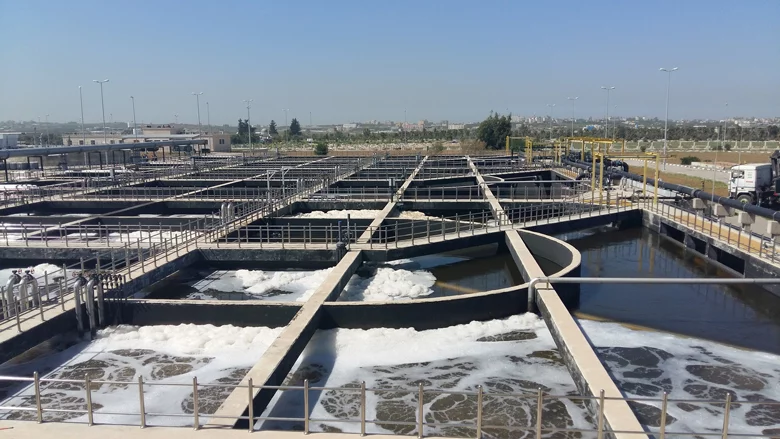
If you have collected STP quotes recently, you have probably seen MBBR, SBR and MBR. All three are aerobic biological processes; they differ in how the bacteria are held and how treated water is separated from them.
MBBR: moving bed biofilm reactor
Small plastic carriers move freely in the aeration tank, and bacteria grow as a film on them. Because the biomass lives on media, the tank can hold more of it in less space. A settling stage, often a tube settler, follows.
- Compact and tolerant of load swings.
- Often used to upgrade old extended-aeration tanks by adding media.
- Needs tertiary filtration for reuse-quality water.
SBR: sequencing batch reactor
One tank performs all steps in sequence: fill, aerate, settle and decant. Timing is controlled automatically.
- Good, consistent effluent quality.
- Relies on automation and decanters working reliably.
- Suits sites that want a controlled, automatic process.
MBR: membrane bioreactor
Membrane modules sit in or after the aeration tank and pull treated water through very fine pores, replacing the settling tank.
- Highest treated-water quality and smallest footprint.
- Higher capital cost; membranes need cleaning and eventual replacement.
- Best where space is very tight or reuse quality is critical.
Quick comparison
| Factor | MBBR | SBR | MBR |
|---|---|---|---|
| Footprint | Small | Medium | Smallest |
| Treated-water quality | Good (with tertiary) | Good (with tertiary) | Very high |
| Capital cost | Moderate | Moderate | Higher |
| Operator skill | Moderate | Moderate, relies on automation | Higher |
| Retrofit of old tanks | Often easy | Possible | Possible |
How we recommend
For most apartments and offices in Bangalore, MBBR or SBR with sand and carbon filtration and disinfection gives reuse-quality water at sensible cost. MBR makes sense when the plant room is small, the reuse target is demanding, or the treated water feeds a cooling tower. The right answer also depends on who will run the plant; we discuss that honestly before you decide. More detail is on our STP plant technologies page.