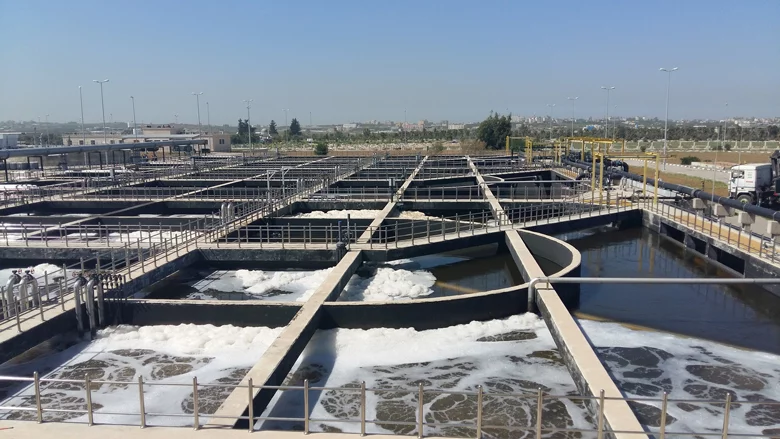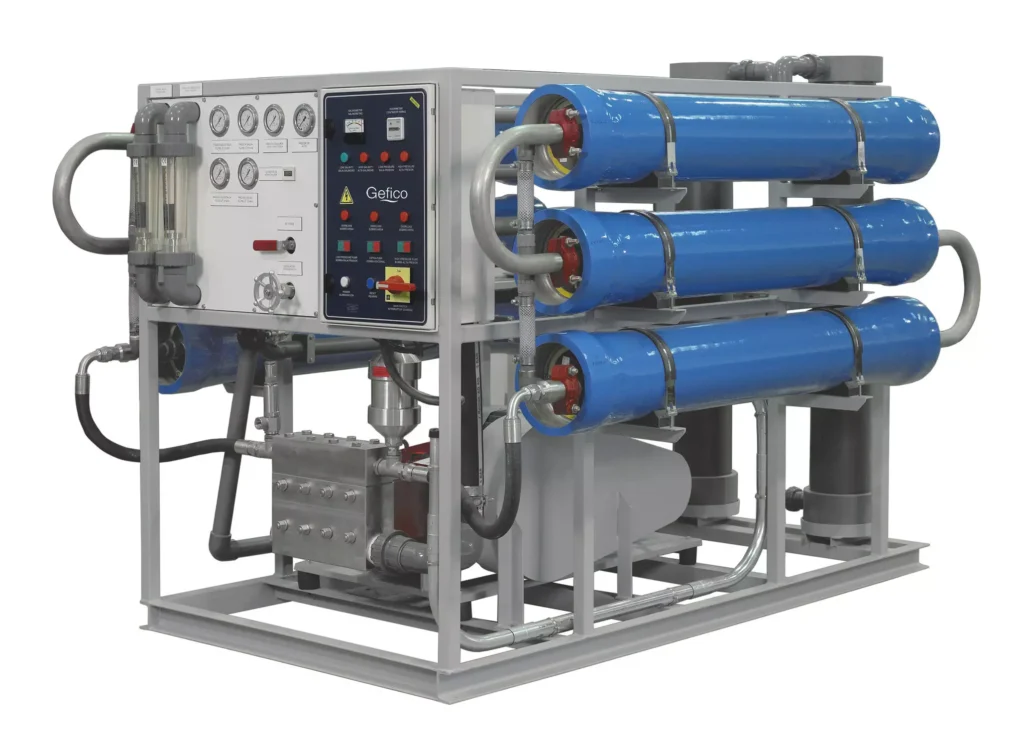
An RO plant that is looked after keeps its output and its membranes for years. One that is not can lose output within months. This checklist is what we use as a baseline for commercial and industrial plants.
Daily
- Record feed pressure, pressure after cartridge filters, membrane feed pressure and reject pressure.
- Record permeate and reject flow from the rotameters.
- Check permeate TDS or conductivity.
- Check antiscalant and other dosing tank levels.
- Look for leaks and unusual pump noise.
Weekly
- Compare readings with the commissioning values. A trend matters more than a single reading.
- Backwash sand and carbon filters if not automatic.
- Check softener hardness if a softener is installed ahead of the RO.
Monthly
- Replace cartridge filters when the pressure drop across them rises above the set limit, or at the planned interval.
- Calibrate or verify the TDS meter.
- Inspect pressure switches and safety trips.
When to clean the membranes
A clean-in-place (CIP) is usually needed when, at the same feed temperature, one of these happens:
- Permeate flow drops by around 10–15% from the baseline.
- Differential pressure across the membranes rises by around 10–15%.
- Permeate TDS rises noticeably.
Cleaning chemistry depends on the foulant: scale, organics, iron or biological growth. Using the wrong cleaner can make things worse, so identify the foulant first.
Pretreatment is half the job
Most membrane failures start upstream: chlorine reaching the membrane, iron or hardness breaking through, or exhausted carbon. Keep the pretreatment maintained and the membranes will look after themselves.
Keep a log
A simple daily log sheet is the most useful maintenance tool. It lets anyone see when performance started to change. Our AMC contracts include logs and monthly summaries, and we stock RO spares and membranes.